

Designers and Developers Working Together Build Better Apps
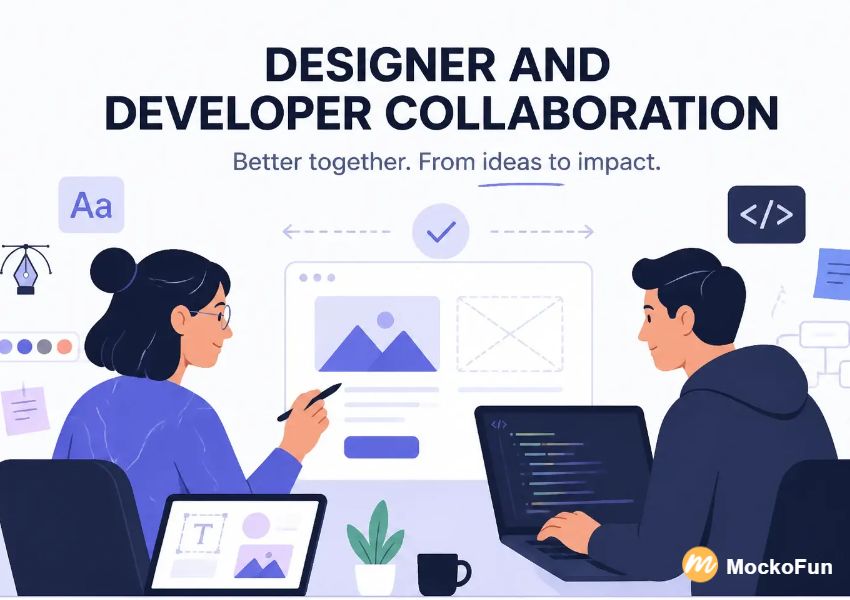
A well-designed app can still fail if developers can’t bring the design to life properly. Many teams treat design and development as separate steps, but the best digital products are built when both work together from the start.
Even the most polished interface can lose its impact if the development team struggles to translate design decisions into a smooth, reliable user experience.

Choosing the right Flutter development company before development begins is a priority for many businesses.
A Flutter development company is a software development firm that specializes in building mobile, web, and desktop applications using Flutter, Google’s cross-platform app framework. Their job is to design, develop, test, and maintain apps that can run on both iOS and Android (and sometimes web/desktop) from a single codebase, saving time and development costs while ensuring that the final product reflects the original design vision.
Design Decisions Have Technical Consequences
Great design is more than colors, typography, and layouts.
Modern applications include animations, responsive interfaces, personalization, onboarding flows, accessibility requirements, and complex user interactions. Every design decision influences how the product will be built. When designers and developers collaborate early, potential challenges can be identified before they become expensive problems.
For example, a custom animation may look simple in a prototype but require significant development effort. Likewise, certain navigation patterns may affect performance, scalability, or future maintenance.
The earlier these discussions happen, the better the outcome.
Why Designers Should Think About Development Early
Many design teams focus on user experience, while engineering teams focus on implementation. The strongest products emerge when both perspectives are considered together.
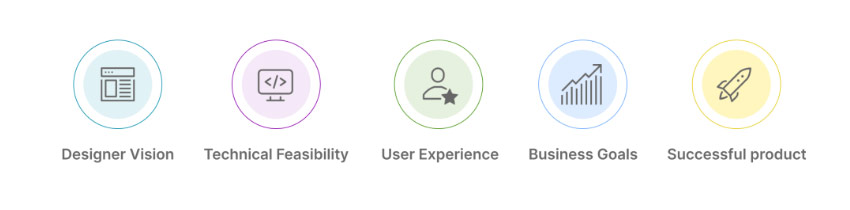

Designers should evaluate factors such as:
- Platform requirements
- Performance expectations
- Accessibility needs
- Future scalability
- Design system consistency
These considerations help ensure that design concepts remain practical while preserving the intended user experience. More importantly, they reduce the risk of significant redesigns later in the project.
Example
When Design and Development Are Out of Sync
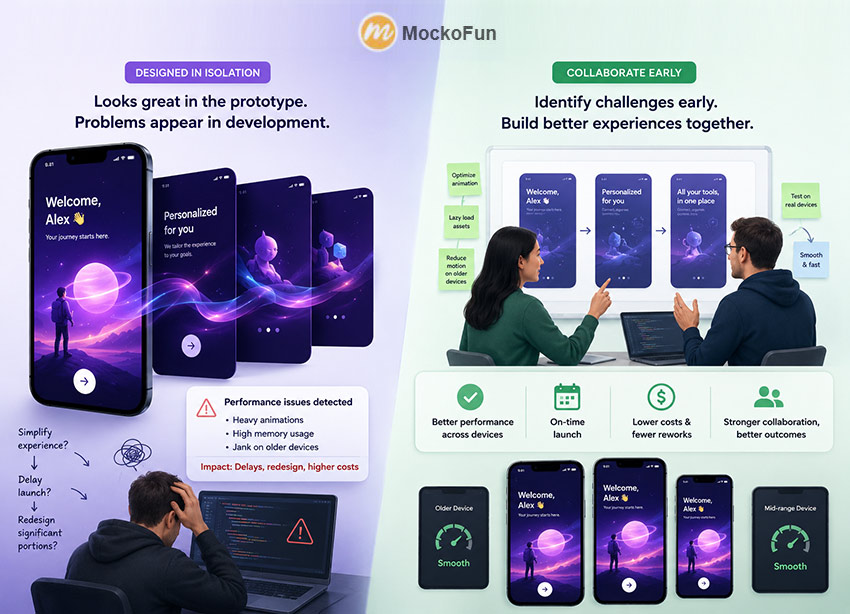
Imagine a designer creates an onboarding experience with custom animations, interactive transitions, and personalized content flows. The prototype looks impressive, but when development begins, the team discovers that some interactions create performance issues on older devices.
Without early collaboration, the team may need to simplify the experience, delay the launch, or redesign significant portions of the interface. Involving developers during the design phase helps identify these challenges before they affect timelines and budgets.

What Makes a Strong Development Partner
A software development partner is an external tech team that acts as an extension of your business. They provide end-to-end services—from technical strategy and UI/UX design to coding, QA, and scaling—to help you build digital products faster without managing internal recruitment.
A development partner should contribute more than technical execution. The best teams actively participate in product discussions, provide technical feedback, and help identify opportunities to improve the user experience.
Several qualities are particularly important:
- Clear communication
- Experience with similar products
- Strong design implementation skills
- Transparent development processes
- Collaborative problem-solving
These main qualities often have a greater impact on project success than hourly rates or team size. After all, a beautiful design only creates value when it is implemented effectively.
Why Flutter Has Changed the Conversation
Cross-platform development has become increasingly important as businesses look to support multiple devices efficiently. Flutter helps teams create consistent user experiences across platforms using a shared codebase.
Flutter comes in after (and during) the design phase, when ideas start turning into a real working app.
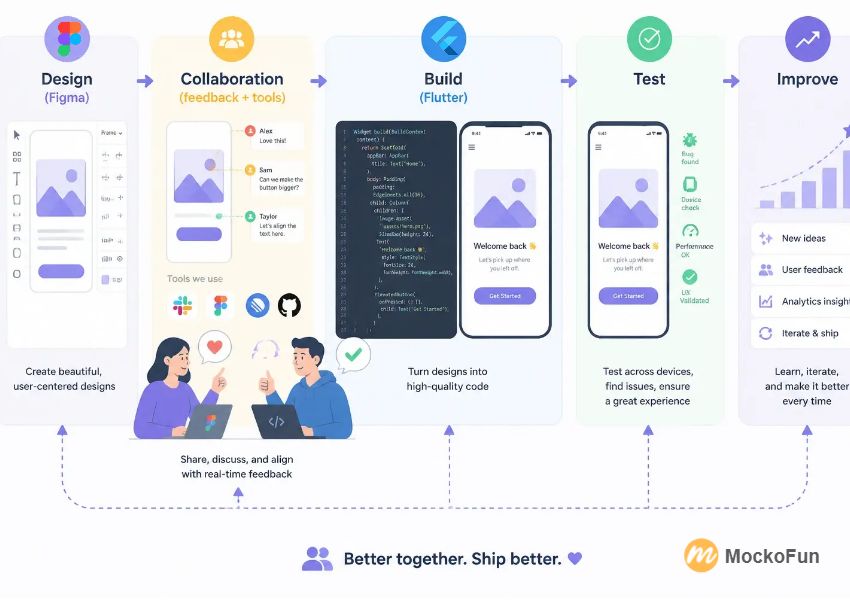
Where Flutter fits in the process
- After UI design (e.g., Figma): Developers use Flutter to build the screens designers created.
- During collaboration: Designers and developers check together if animations, layouts, and interactions are realistic and adjust if needed.
- During development: Flutter lets developers quickly turn UI into working components, so designers can see real results early.
- For iteration: Changes in design can be tested and updated faster because Flutter supports fast UI updates (hot reload).
Simple view of the workflow
Design (Figma) → Collaboration (feedback + tools) → Build (Flutter) → Test → Improve
Why Flutter matters here
- Flutter acts as the bridge between design and code, helping teams:
- Keep UI consistent across platforms
- Reduce differences between design and final product
- Speed up design-to-development feedback cycles
For designers, this means:
- Maintaining visual consistency across iOS, Android, web, and desktop
- Making designs easier to implement accurately
- Supporting custom animations and UI elements
- Speeding up design iterations and feedback
For businesses, it often means faster development, easier maintenance, and a more consistent experience for users.
Building Better Products Through Collaboration
Successful digital products rarely emerge from isolated teams.
The strongest outcomes occur when designers, developers, product managers, and stakeholders collaborate throughout the process. When development considerations are introduced early, design decisions become more informed. When developers understand the reasoning behind design choices, implementation becomes more effective.
This shared understanding creates products that not only look good but also perform well and scale successfully over time.
FAQ
Why should designers collaborate with developers early?
Early collaboration helps identify technical constraints, reduce redesign costs, and improve implementation quality.
How do designers and developers work with each other in the Age of AI?
In the age of AI, designers and developers work more closely and faster than before. Designers use AI tools to quickly create and test UI ideas, while developers use AI to speed up coding and catch issues early. Instead of long handoffs, they collaborate in real time, refining designs and features together as the product is built.
Does Flutter help maintain design consistency?
Yes. Flutter allows teams to create consistent user experiences across multiple platforms from a shared codebase.
What should I look for in a Flutter development company?
Look for strong communication, relevant project experience, design implementation expertise, and a collaborative development process.
Conclusion
Great app design starts long before development begins. Working with the best AI tools for graphic designers is not enough to create a successful product. A designer should understand from the beginning whether a design is feasible from a developer’s perspective.
Choosing the right development partner is not simply a technical decision. It is a decision that directly affects how successfully a product vision is transformed into a real user experience.
By bringing designers and developers together early, organizations can reduce friction, avoid costly surprises, and create products that deliver both visual quality and long-term value.